Booking choice: The reverse boutique tour, from $97 per person. Check dates Tour details
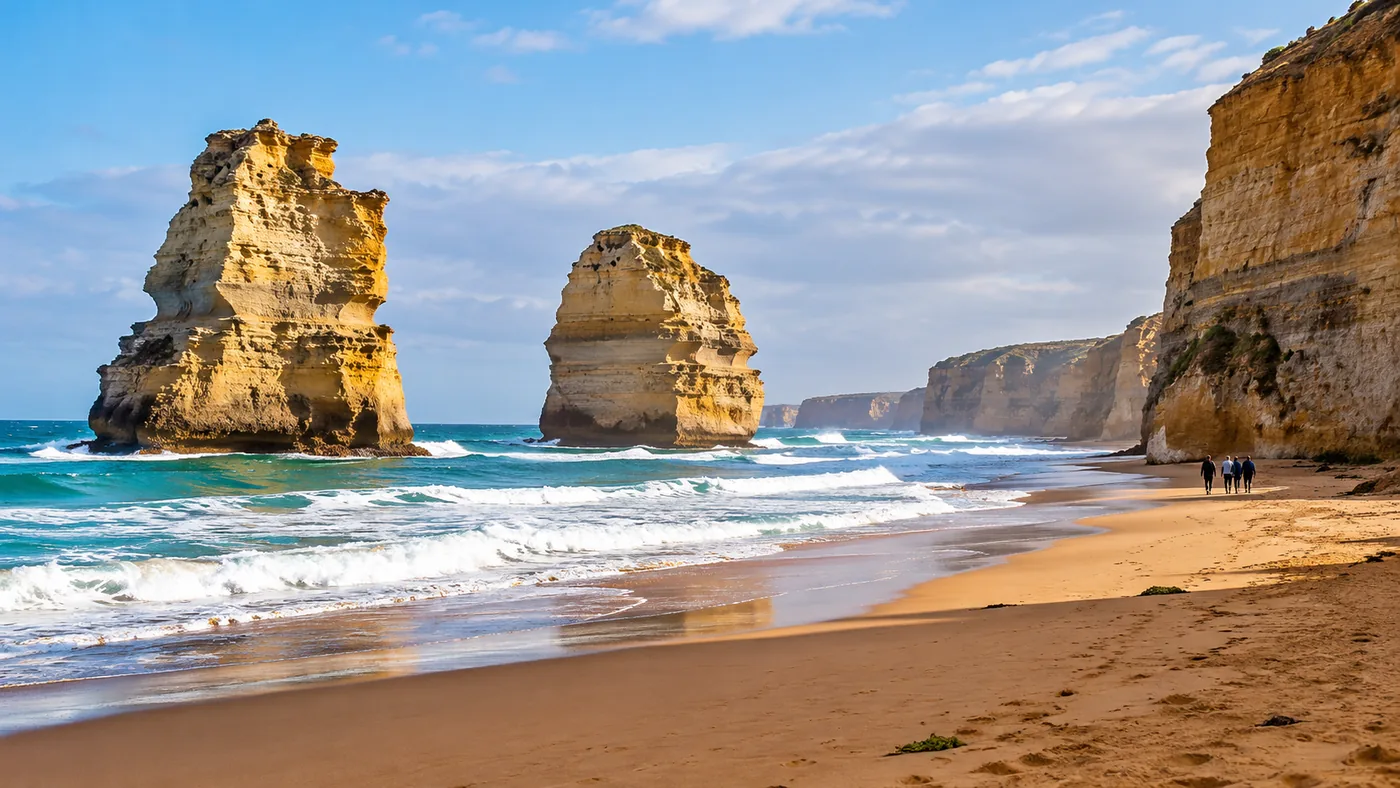
The name has always promised more than the coast delivers. The Twelve Apostles are limestone sea stacks off the cliffs of Port Campbell National Park, and the count has been falling slowly since long before anyone counted them.
This guide covers how many stand today, when the others fell, how the stacks formed, why the name stuck, and the people whose Country this has always been.
The quick answer
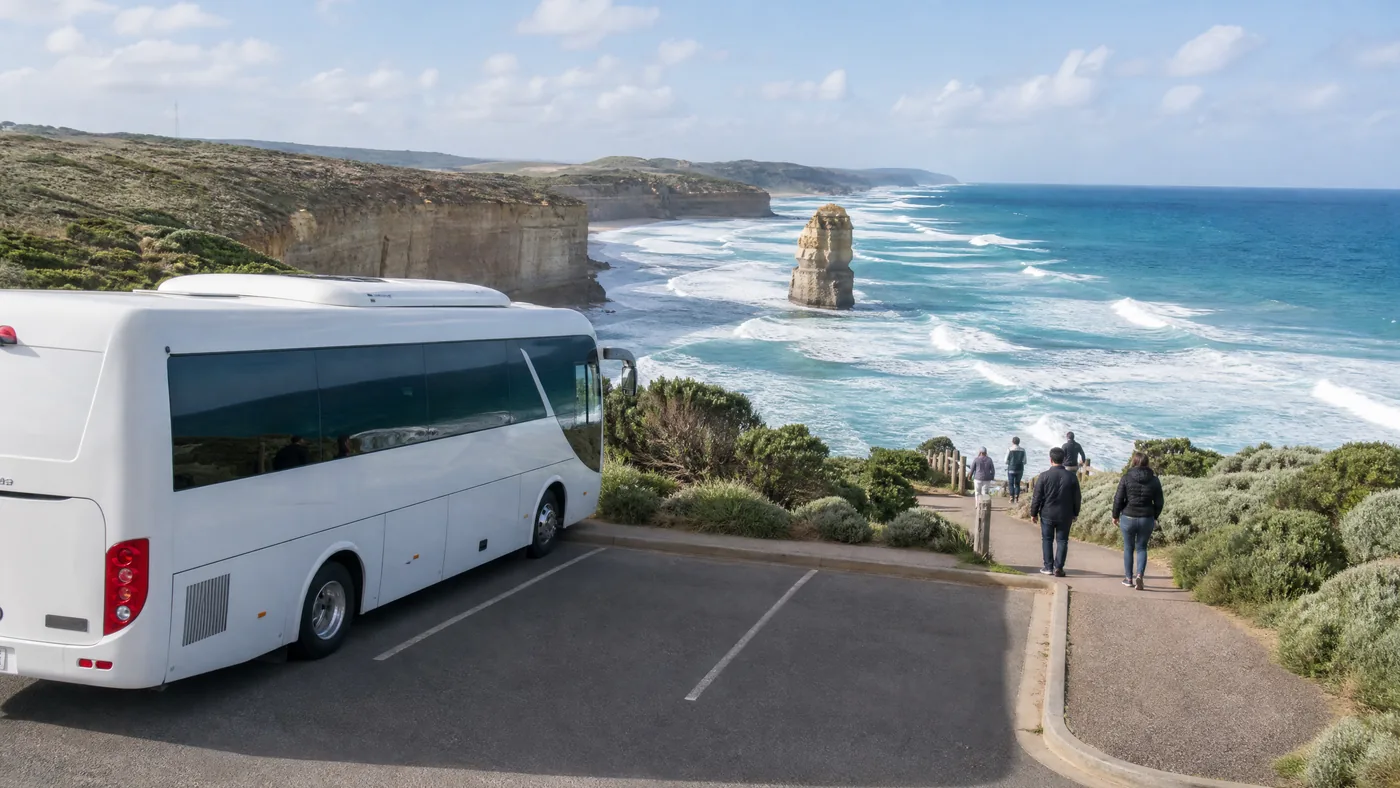
Seven stacks stand of the original nine, and six are visible from the main platform. A stack about 50 m tall fell in July 2005 and another in 2009. The stacks are Port Campbell Limestone, laid down 15 to 5 million years ago and carved by the Southern Ocean into caves, arches and finally stacks. They were first called the Pinnacles, then the Sow and Pigs, and renamed for tourism.
How many of the Twelve Apostles are left?
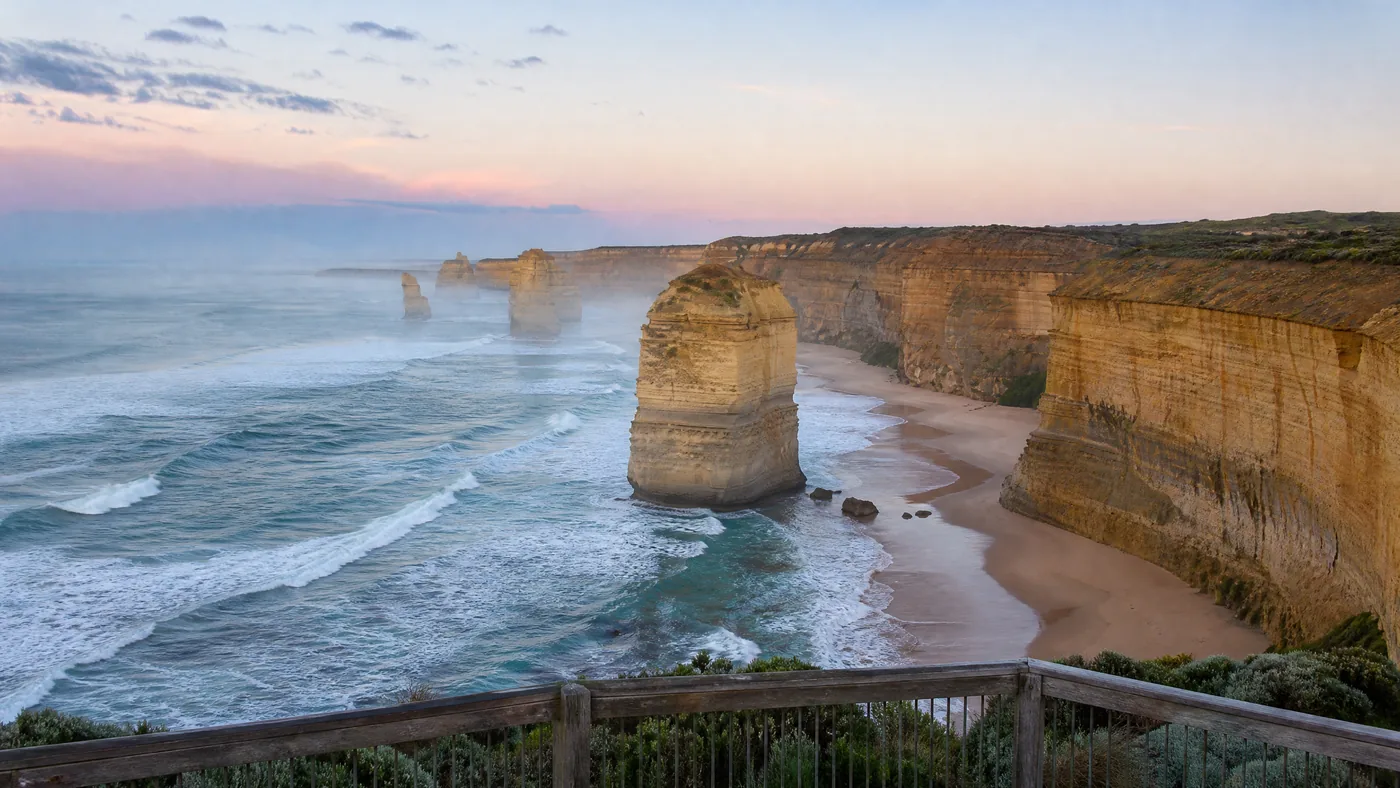
Seven. Of the original nine stacks, seven still stand, and six of them are visible from the main viewing platform.
Wikipedia and Encyclopaedia Britannica both give seven, after the collapses of 2005 and 2009. Count from the main platform and you will get six, spread along the coast to the west.
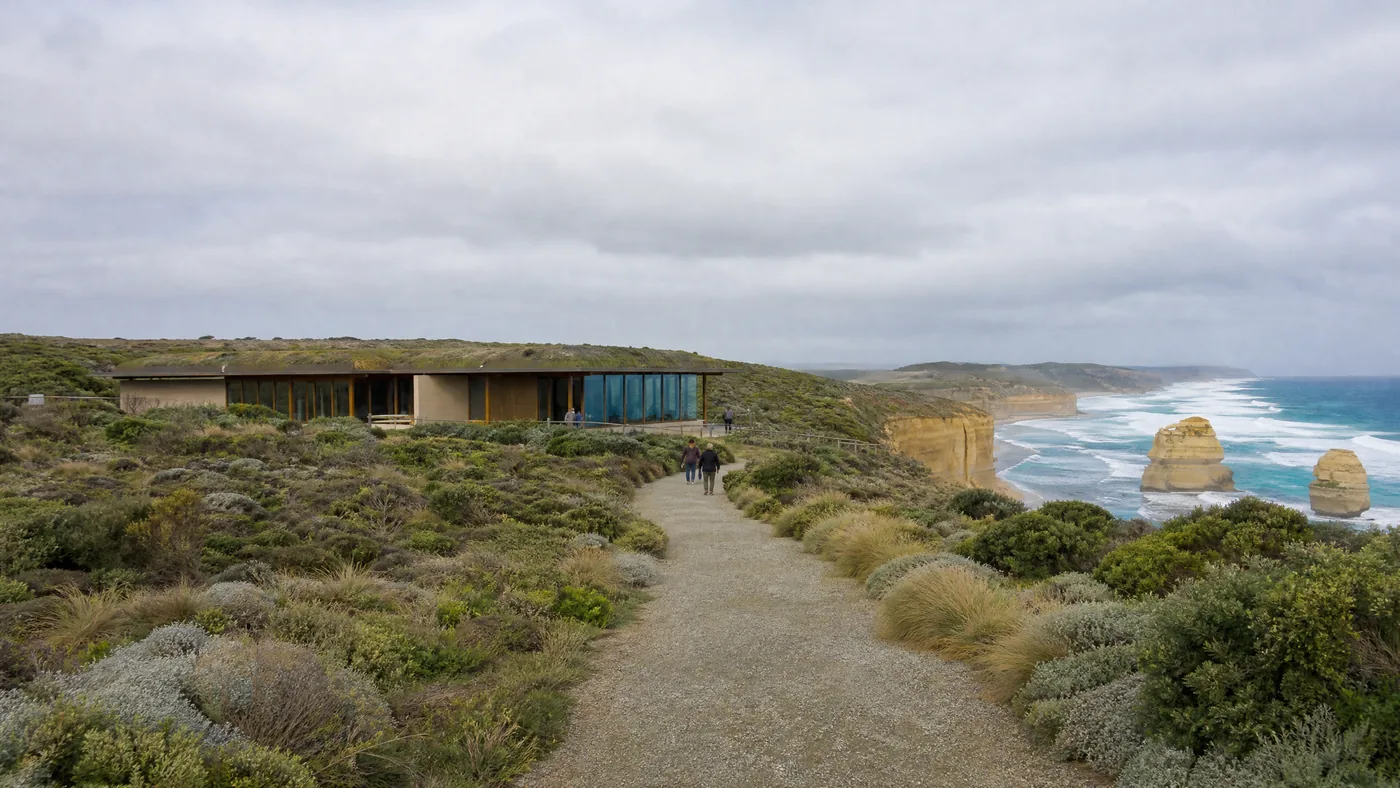
The rooftop deck at the new Keerray Woorroong Visitor Centre adds a higher view over the Shipwreck Coast, and Gibson Steps, about 2 km east, shows two more stacks from beach level.
Were there ever twelve Apostles?
No. There were only ever nine stacks. The name was chosen to draw tourists, after earlier names like the Pinnacles and the Sow and Pigs.
The formation was first known as the Pinnacles, and later as the Sow and Pigs, with Mutton Bird Island as the sow and the smaller stacks as her piglets. The name the Twelve Apostles was adopted to make the site sound grander and bring in visitors. It worked: the Corangamite Shire mayor put visitor numbers at about 8 million a year in 2025.
Mutton Bird Island still stands off Loch Ard Gorge, where the clipper Loch Ard was wrecked in 1878. Our guide to Gibson Steps, Loch Ard Gorge and London Bridge tells that story.
When did the Twelve Apostles collapse?
A stack about 50 m tall collapsed in July 2005, leaving eight, and another fell in 2009, leaving seven. Other formations nearby have fallen too.
The 2005 collapse was sudden: a whole stack slumped into the sea. Collapses like this are how the coast changes, and they keep happening along the cliffs of Port Campbell National Park. The table lists the best-known recent falls.
| Year | What fell | Where |
|---|---|---|
| 1990 | The arch joining London Bridge to the mainland; two visitors were stranded and rescued by helicopter | Just beyond Port Campbell |
| July 2005 | A stack about 50 m tall | Twelve Apostles |
| 2009 | A second stack, leaving seven | Twelve Apostles |
| 2009 | Island Archway, leaving two separate pillars | Loch Ard Gorge |
How were the Twelve Apostles formed?
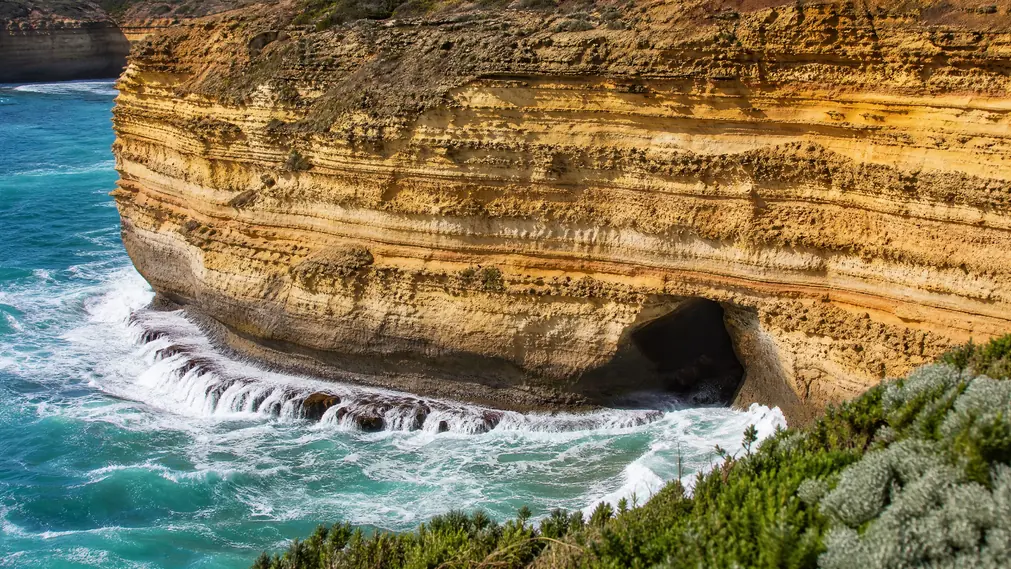
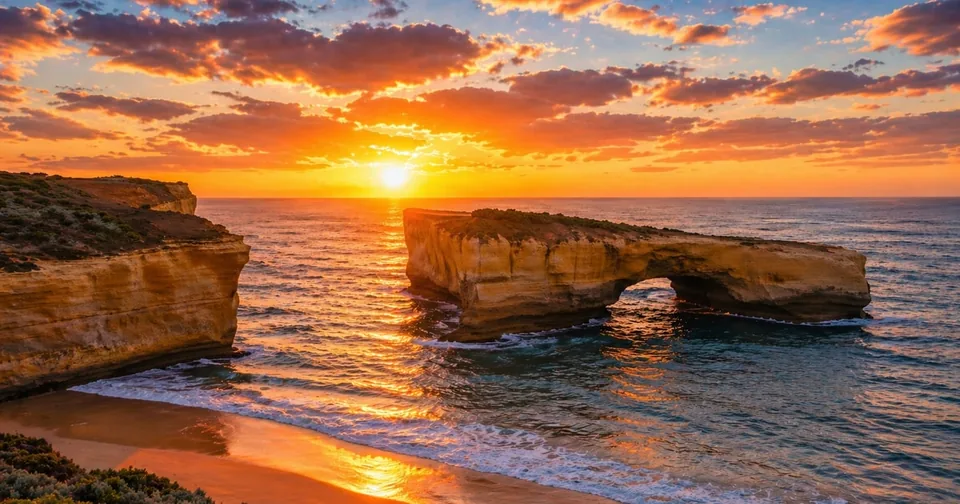
Southern Ocean waves cut caves into the limestone cliffs, the caves became arches, and the arches collapsed, leaving the stacks standing apart.
The rock is Port Campbell Limestone, laid down on the sea floor in the mid to late Miocene, about 15 to 5 million years ago. It is soft and uneven. Cosmos magazine explains that layers of softer mudstone and clay, often near the base, wear away first, undercutting the cliff above until it fails. Wind, rain and salt spray work on the top while the swell works on the bottom.
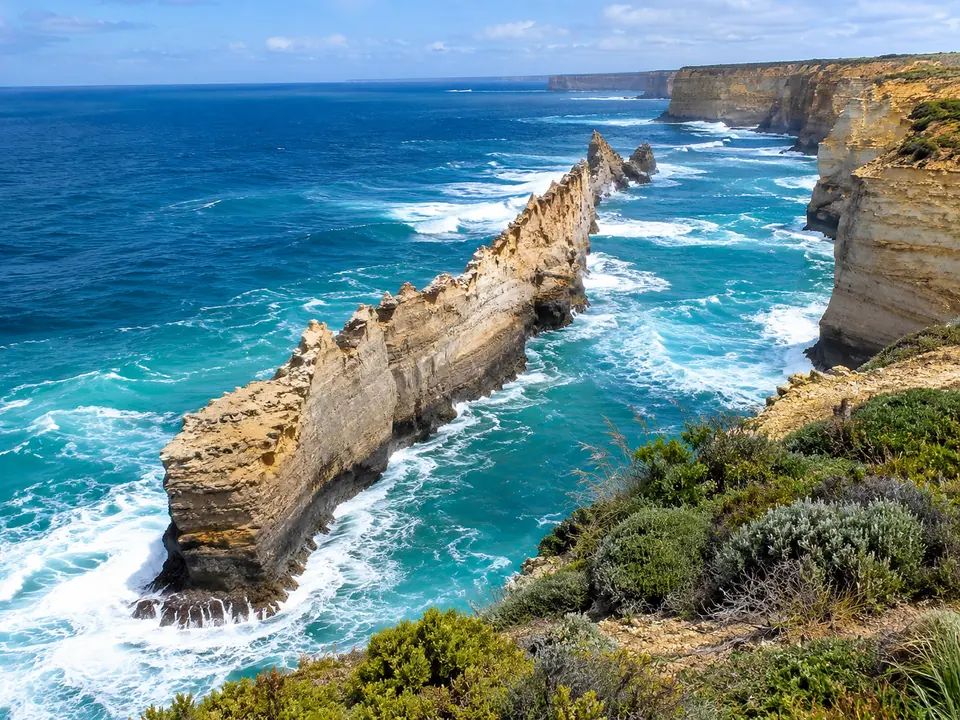
The cycle runs in order: headland, cave, arch, stack, rubble. You can see every stage on this coast within a few kilometres, from the arch at London Bridge to the narrow blade of The Razorback near Loch Ard Gorge.
How long will the Twelve Apostles last?
No one can put a date on it. Erosion continues and more stacks will fall, but new stacks form from today's headlands.
The Great Ocean Road Coast and Parks Authority describes a coast that is always moving, and Wikipedia notes that existing headlands are expected to become new stacks in the future. Cosmos magazine puts the general rate of erosion at roughly two centimetres a year: too slow to notice from one visit to the next, until a collapse happens all at once.
The past is easier to read than the future. In 2016, a University of Melbourne researcher found five drowned stacks on the sea floor off the coast, shaped before sea levels rose after the last ice age. The view you see is one frame in a long film, which is a good reason not to put the trip off.
See the seven while they stand: the reverse tour reaches the Twelve Apostles first, before the coaches, with free cancellation up to 24 hours before.
Check dates for the reverse boutique tourHow tall are the Twelve Apostles?
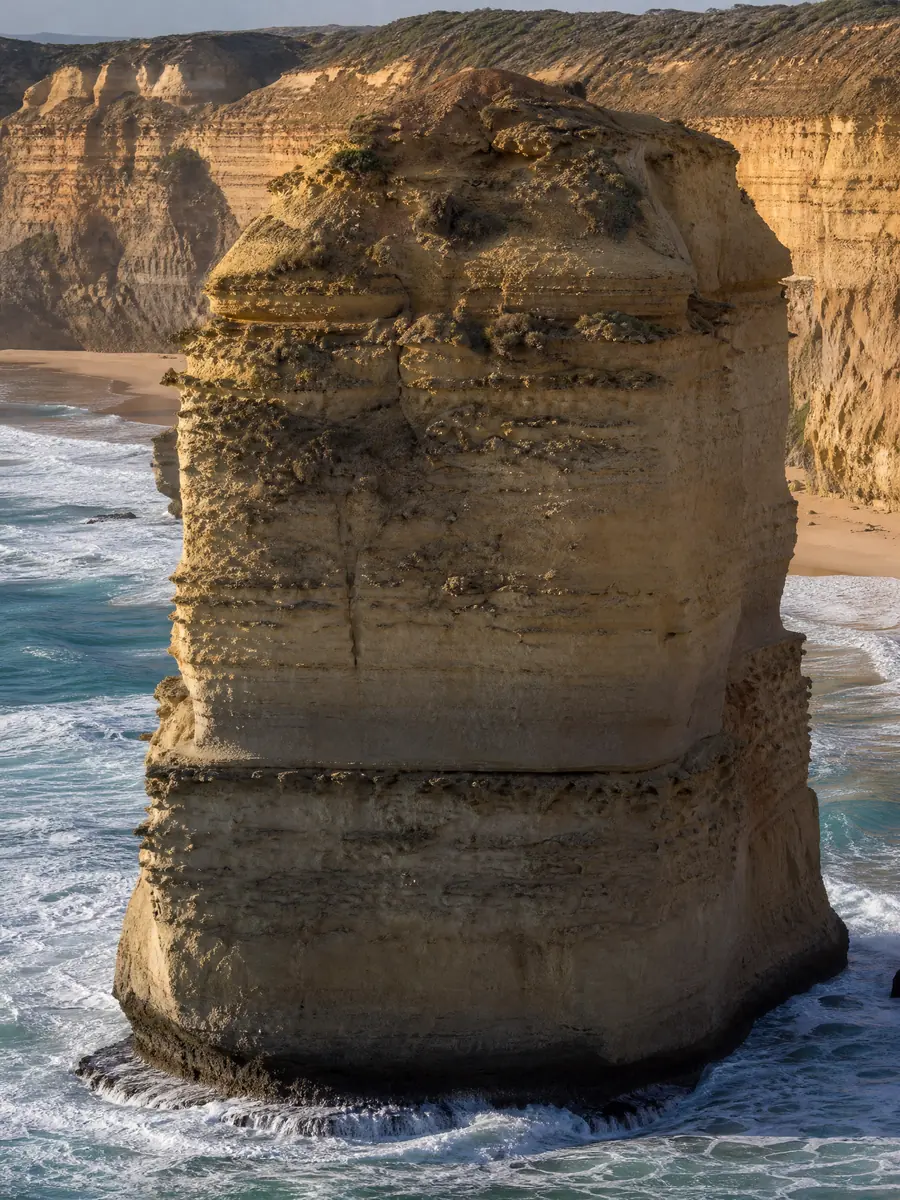
The tallest stack still standing is about 45 m, per Encyclopaedia Britannica; Wikipedia describes the stacks as up to 50 m high.
The cliffs behind them are of a similar height, so the stacks rarely look as tall as they are from the platform. The best sense of scale comes from the beach at Gibson Steps, where you stand at the foot of the cliffs and look up, or from the air.
The private helicopter flight from Essendon Fields flies over the stacks, lands at the Twelve Apostles helipad and gives you 2 hours on the ground. It is the easiest way to take in the whole group at once.
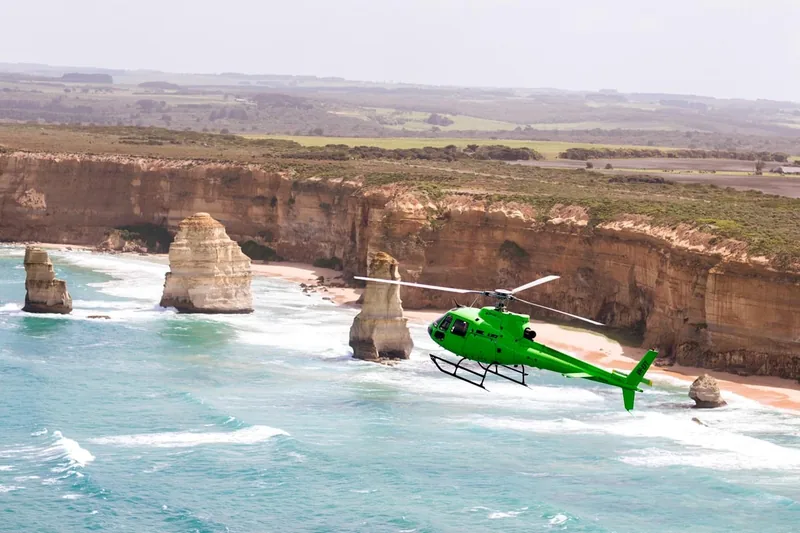
Fly over the Twelve Apostles, land at the helipad and spend 2 hours at Gibson Steps or the Castle Rock lookout, private for up to 5.
Explore the helicopter flight Tour detailsWhose Country are the Twelve Apostles on?
The Eastern Maar people's. In March 2023 the Federal Court recognised their native title over 8,578 km2 of south-west Victoria, including the Twelve Apostles.
The Great Ocean Road Coast and Parks Authority names the Eastern Maar and Wadawurrung Peoples as the Traditional Owners of the Great Ocean Road. At the new Keerray Woorroong Visitor Centre, the Welcome Garden and the exhibition share Eastern Maar heritage, and the Eastern Maar community is to be exempt from the booking fee that starts in April 2027.
Take the time to read the panels before you walk out to the cliffs. They change how the view reads.
Where is the best place to see the Twelve Apostles?
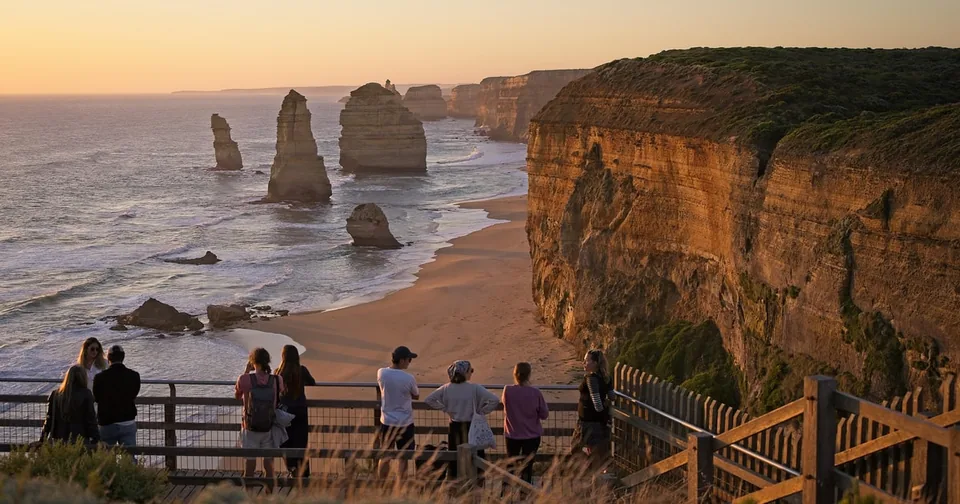
The main viewing platforms and the rooftop deck for the classic view, Gibson Steps beach for the stacks from below, and a helicopter for all seven.
The platforms are a 10 to 15 minute walk from the new visitor centre, per ACM's regional newspapers, and the rooftop deck can be reached with wheelchairs and prams. Arrive in the morning or late afternoon for the best light. Since 16 October 2026, drivers need a timed-arrival booking on the official Twelve Apostles website, free until April 2027; on a tour, the operator handles it.
For the timing that suits you, see our guide to reverse, classic and sunset tours.
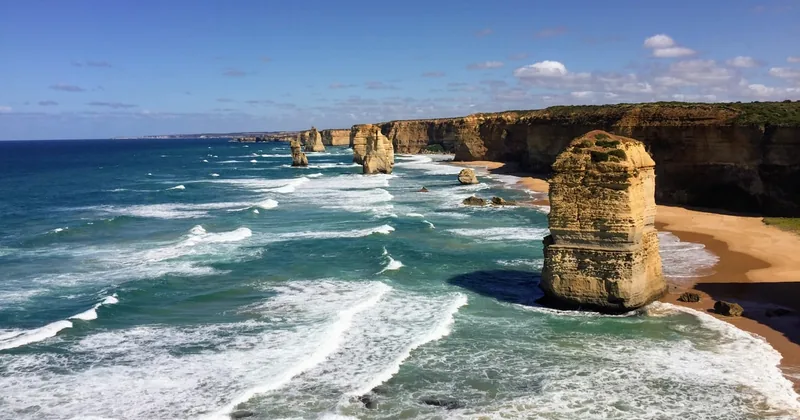
The Twelve Apostles first, then The Razorback, the Gibson Steps lookout and Loch Ard Gorge, with a guide to explain the geology. Up to 12 guests.
Explore the reverse boutique tour Tour detailsFrequently asked questions
How many of the Twelve Apostles are left?
Seven of the original nine stacks stand. One collapsed in July 2005 and another in 2009, and six can be seen from the main viewing platform.
Why are they called the Twelve Apostles if there were only nine?
The name was adopted to attract tourists. The stacks were first called the Pinnacles, then the Sow and Pigs.
When did the last Apostle fall?
The most recent collapse at the Twelve Apostles was in 2009, which left seven stacks. Island Archway at nearby Loch Ard Gorge also fell in 2009.
What are the Twelve Apostles made of?
Port Campbell Limestone, laid down on the sea floor about 15 to 5 million years ago and carved by the Southern Ocean.
Ready to book
Choose your tour
Free cancellation on every option: Great Ocean Road Boutique Tour in Reverse up to 24 hours before; Private Helicopter Flight to the 12 Apostles up to 3 days before; Great Ocean Road Full-Day Sunset Tour up to 24 hours before. Prices are from-prices in USD and move with the season.
Great Ocean Road Boutique Tour in Reverse
- Minibus from three central Melbourne pickup points
- Guide and wildlife spotting, with a koala walk
- A "12 Apostles Entrance Ticket" in the operator's words (entry is free until April 2027)
Private Helicopter Flight to the 12 Apostles
Fly from Melbourne, land at the Apostles and spend 2 hours there
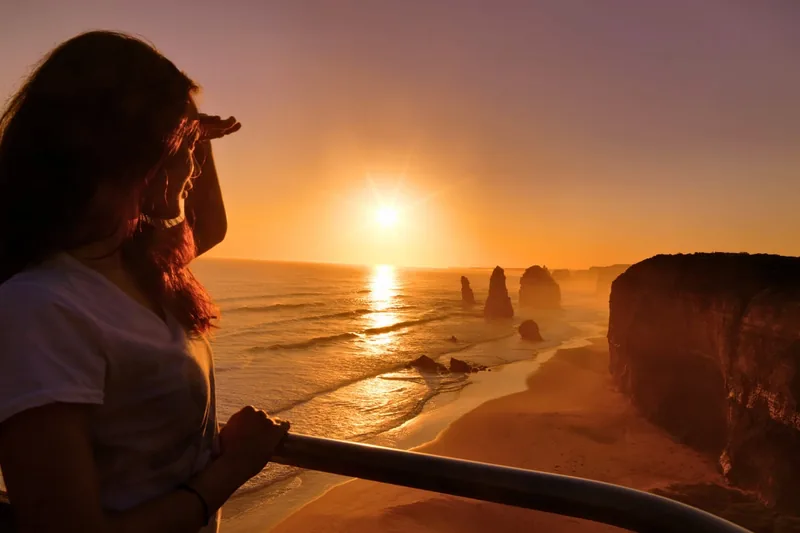
Great Ocean Road Full-Day Sunset Tour
- Pickup and drop-off at selected Melbourne city hotels
- Expert local guide, up to 24 guests
- National park entry fees